
Planning a kitchen layout sounds easy at first, but it often becomes confusing quickly. Many homeowners face the same problems. They don’t know which layout will work best. They worry about wasting space or choosing the wrong design. Some even end up with kitchens that look good but feel hard to use. From real experience, one of the biggest mistakes is focusing only on style and not on daily function. If you want to explore more ideas, you can also check our complete guide on kitchen design and style to understand how layouts fit into overall kitchen design.
Experts, including the National Kitchen and Bath Association, recommend designing kitchens around movement and workflow. A good layout should make cooking simple, not stressful. This guide will help you understand kitchen layout ideas, avoid common mistakes, and choose the best option based on your space, needs, and lifestyle.
Kitchen Layout Guide- Quick Summary:
This kitchen layout guide helps you understand different layout types, choose the right one for your space, and plan your kitchen efficiently. It covers key concepts like the work triangle, modern zones, spacing rules, and common mistakes to avoid. With practical tips and expert guidance, it helps you design a kitchen that is functional, comfortable, and suited to your lifestyle.
Quick Takeaways
- L-shaped kitchens are best for most homes
- Galley layouts work best for small spaces
- Use the kitchen triangle for better workflow
- Keep at least 42 inches clearance for walkways
- Choose a layout based on your daily cooking habits
What Are the Most Common Kitchen Layouts?
A kitchen layout shows how your space is arranged. It includes cabinets, appliances, and work areas.
Most homes use these layouts:
-
- L-shaped
-
- U-shaped
-
- Galley
-
- One-wall
-
- Island
Each kitchen floor plan works best for a different space and lifestyle.
How to Choose the Best Kitchen Layout for Your Home
Before you pick a layout, ask yourself:
-
- How big is your kitchen?
-
- How often do you cook?
-
- How many people use the kitchen?
-
- Do you need more storage or more space?
Quick guide:
-
- Small kitchen → Galley or one-wall
-
- Medium kitchen → L-shaped
-
- Large kitchen → U-shaped or island
Real insight: If more than one person cooks in your home, avoid tight layouts like narrow galley kitchens. It quickly becomes frustrating.
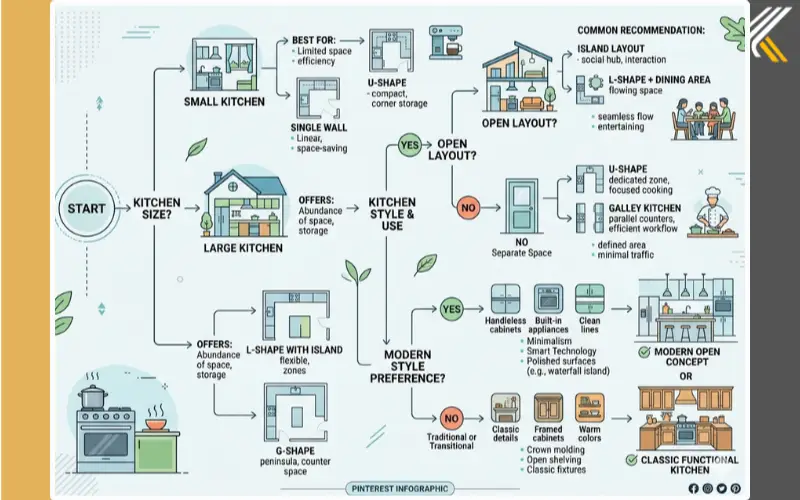
Kitchen Layout Decision Guide
| Your Situation | Best Layout |
|---|---|
| Small kitchen | Galley / One-wall |
| Medium space | L-shaped |
| Large kitchen | U-shaped / Island |
| Open floor plan | L-shaped / Island |
| Multiple cooks | U-shaped / Zoned layout |
Kitchen Triangle Design Layout
The kitchen triangle is a classic design rule. It connects:
-
- Sink
-
- Stove
-
- Refrigerator
You should move easily between these points.
What Is the Kitchen Triangle?
It is a triangle between key work areas. It reduces walking distance.
According to National Kitchen and Bath Association, proper spacing between these points improves efficiency and safety in the kitchen.
How It Works
-
- Each side: 4–9 feet
-
- Total: 13–26 feet
-
- No obstacles in path
-
- No traffic through triangle
These guidelines are widely followed in modern kitchen design standards, including recommendations from KitchenAid.
Benefits
-
- Faster cooking
-
- Better workflow
-
- Less effort
Practical note: In real homes, strict triangle rules don’t always work. Open kitchens often need more flexible layouts.
Kitchen Triangle vs Kitchen Zones
Modern kitchens now use zones.
Triangle:
-
- Best for small kitchens
-
- Focus on movement
Zones:
-
- Prep zone
-
- Cooking zone
-
- Cleaning zone
Zones work better for families and multiple users.
Experience tip: In busy homes, zones reduce crowding. Everyone can work without getting in each other’s way.
Types of Kitchen Layouts
Now let’s explore popular kitchen layout ideas.
U-Shaped Kitchen Layout
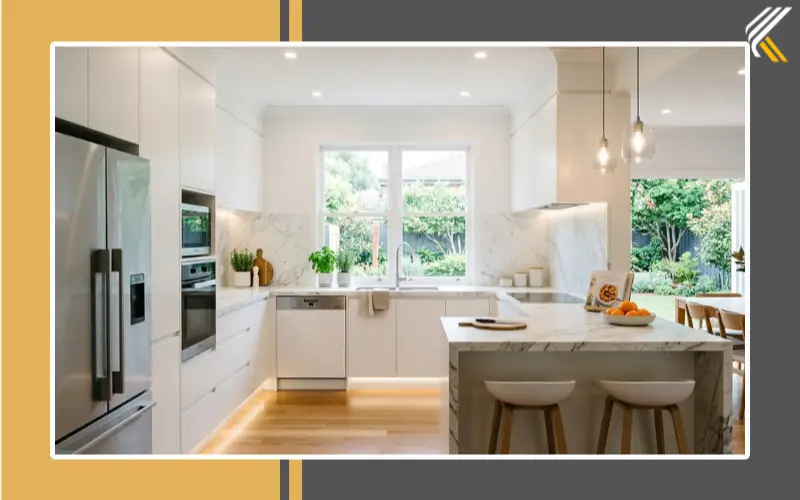
Uses three walls.
Best for: Large kitchens
Pros: More workspace
Cons: Can feel closed
Real experience: This layout is great for serious cooking, but it may feel isolated if your kitchen is closed off.
L-Shaped Kitchen Layout
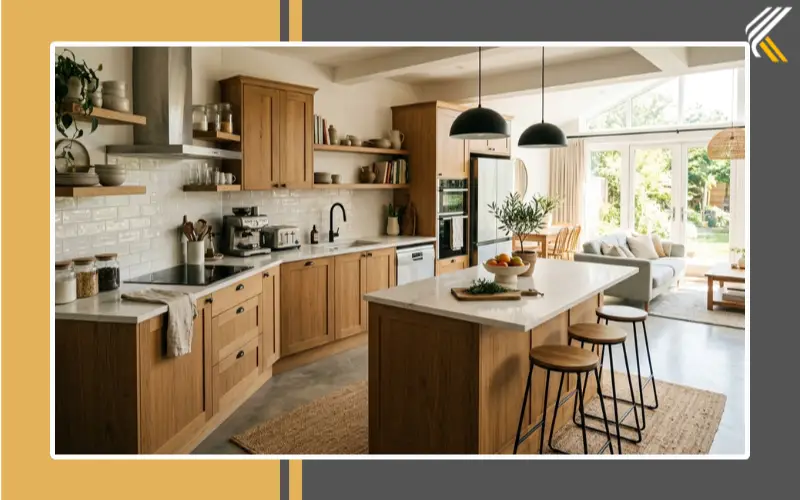
Uses two walls.
Best for: Open kitchens
Pros: Flexible
Cons: Less storage
Real experience: Many homeowners prefer this layout because it keeps the kitchen open and social.
G-Shaped Kitchen Layout (Peninsula)
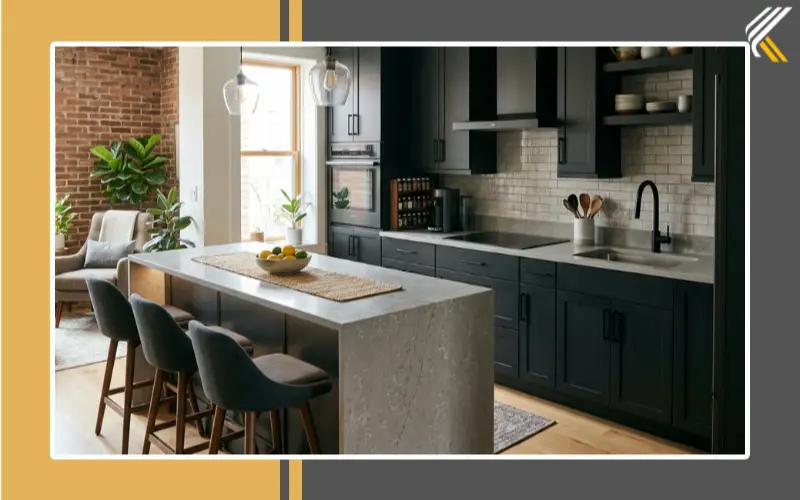
U-shape with extra counter.
Best for: Big kitchens
Pros: More space
Cons: Can feel tight
Tip: Works well if you want extra seating without a full island.
Galley Kitchen Layout (Parallel)
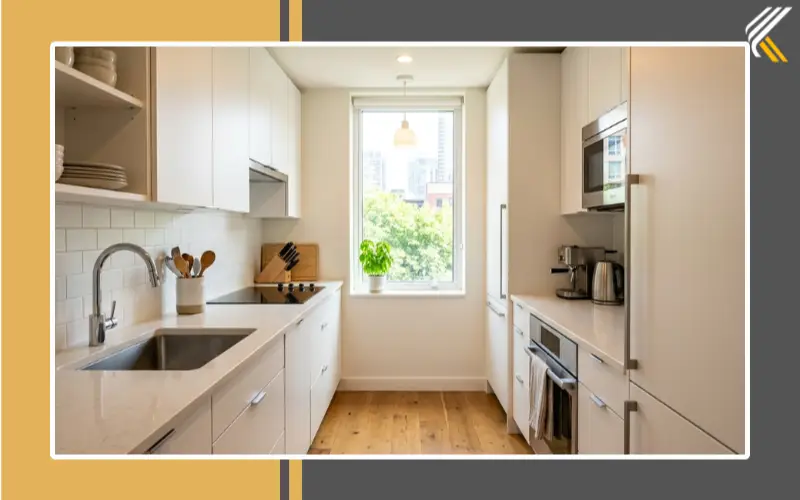
Two parallel walls.
Best for: Small spaces
Pros: Efficient
Cons: Narrow
Real experience: This layout works well, but make sure the walkway is wide enough for comfort.
One-Wall Kitchen Layout (Straight)
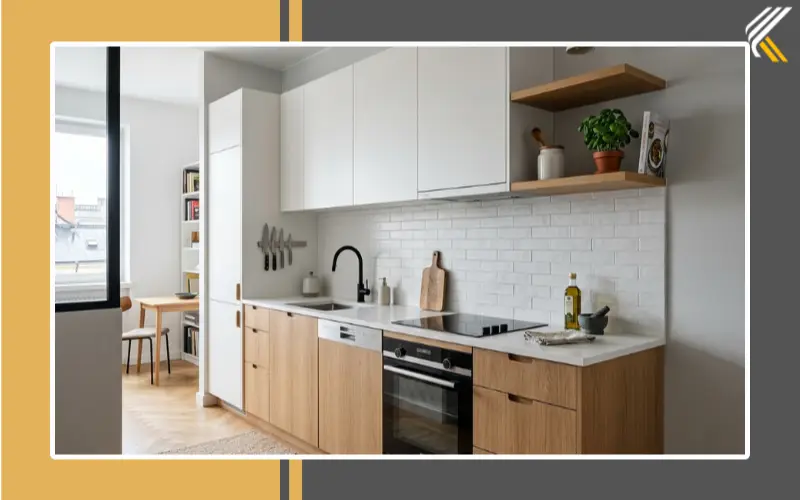
Everything on one wall.
Best for: Small homes
Pros: Saves space
Cons: Less storage
Island Kitchen Layout
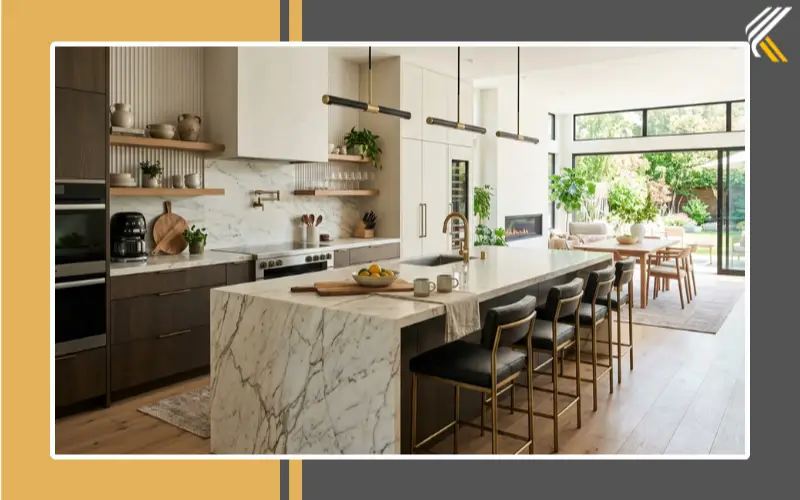
Adds a center island.
Best for: Open kitchens
Pros: More prep space
Cons: Needs space
Real insight: Islands are popular, but many kitchens are too small for them. Always check spacing first.
For a modern look, many homeowners now prefer a waterfall kitchen island design that adds both style and function.
Open Kitchen Layout
Connected to the living area.
Best for: Modern homes
Pros: Social
Cons: Less privacy
You can also enhance open layouts by adding kitchen arch design ideas that create a smooth transition between spaces.
Kitchen Layout Comparison Table
| Layout | Best For | Pros | Cons |
|---|---|---|---|
| L-shape | Open space | Flexible | Less storage |
| U-shape | Large kitchens | Efficient | Closed feel |
| Galley | Small kitchens | Compact | Narrow |
| One-wall | Apartments | Space-saving | Limited space |
| Island | Open kitchens | Social | Needs space |
| G-shape | Large kitchens | Extra counter | Tight |
Quick Layout Insights
- Best for flexibility: L-shaped
- Most efficient: Galley layout
- Best for space: U-shaped
- Best for social use: Island layout
Best Kitchen Layout by Use Case
Small Kitchens
Galley or one-wall works best.
Open Floor Plans
L-shape or island is ideal.
Families
U-shape or island gives more space.
Entertaining Guests
Island layout is best.
Kitchen Layout Comparison: Which One Should You Choose?
-
- Need space → U-shape
-
- Need flexibility → L-shape
-
- Small kitchen → Galley
-
- Social kitchen → Island
Choose based on daily use, not just design trends.
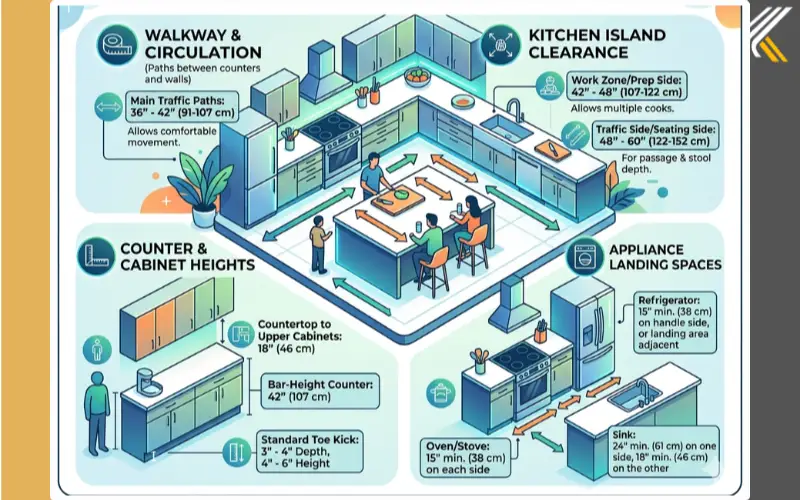
Kitchen Layout Dimensions & Spacing Guide
-
- Walkway: 36–48 inches
-
- Work aisle: 42–48 inches
-
- Island clearance: 42 inches
-
- Counter height: 36 inches
-
- Seating: 24 inches per person
-
- Sink to stove: 4–7 feet
These guidelines align with standards recommended by National Kitchen and Bath Association.
Kitchen Spacing Cheat Sheet
- Walkway: 36–48 inches
- Work aisle: 42–48 inches
- Island clearance: 42 inches
- Counter height: 36 inches
- Seating space: 24 inches per person
Kitchen Layout Mistakes to Avoid
-
- Blocking workflow
-
- Tight walkways
-
- Poor lighting
-
- Bad appliance placement
-
- No storage planning
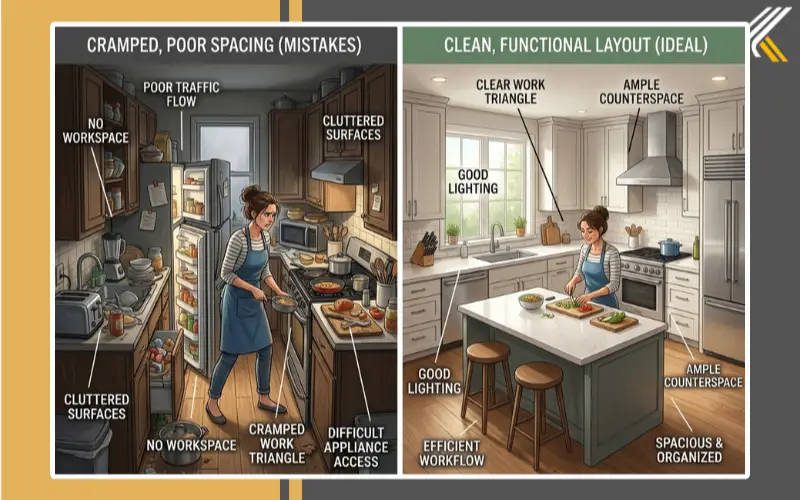
Real experience: One of the most common mistakes is adding an island without enough space. This creates more problems than benefits.
How to Plan the Perfect Kitchen Layout
- Measure your space
- Understand your needs
- Choose the right layout
- Plan storage
- Keep workflow smooth
When planning your layout, it’s also important to understand the cost of shaker style cabinets, as cabinetry takes a major part of your budget.
Expert Kitchen Layout Tips
-
- Keep daily items nearby
-
- Use vertical space
-
- Add lighting in work areas
-
- Avoid overcrowding
Modern Kitchen Layout Trends 2026
-
- Zoned kitchens
-
- Smart appliances
-
- Hidden storage
-
- Double islands
-
- Open designs
FAQs
What is the best kitchen layout?
Depends on your space and needs.
Best layout for small kitchens?
Galley or one-wall.
Kitchen Layout Final Checklist
- Is the workflow smooth?
- Is there enough walking space?
- Are appliances placed correctly?
- Do you have enough storage?
- Can more than one person use the kitchen comfortably?
Conclusion
A well-planned kitchen layout makes a big difference in daily life. It improves how you move, cook, and use your space. The best layouts are not always the most expensive ones. They are the ones designed with care and purpose. From practical experience, even small layout changes can make a kitchen more comfortable and efficient.
Professional guidelines, such as those from the National Kitchen and Bath Association, highlight the importance of spacing, workflow, and smart planning. Before you finalize your design, think about how you use your kitchen every day. The right decision now will save time, effort, and money in the future.
About Kitchenoro
Kitchenoro is your trusted partner for complete kitchen remodeling, renovation, and elegant design. We specialize in premium cabinet installation, countertops, and transforming kitchens into luxurious, functional spaces. With expert craftsmanship and tailored solutions, Kitchenoro turns your vision into reality. Contact us to elevate your kitchen’s style and functionality!